
Laser vs. Dot Peen Marking: Which Is Right for Your Application?
Permanent part marking is essential for today’s manufacturers. From product traceability and quality control to regulatory compliance and branding, the right marking technology helps ensure every part can be identified throughout its lifecycle.
Two of the most common solutions are laser marking and dot peen marking. Both create durable, permanent marks, but they work in very different ways. As a result, each technology has advantages depending on the material, production environment, and marking requirements.
So, which is better?
The answer depends on your application. Understanding the strengths of each technology can help you choose a marking system that supports your production process today and your business as it grows.
What Is Laser Marking?
Laser marking is a non-contact process that uses a focused beam of light to permanently alter a material’s surface. Depending on the material and the desired result, the laser may engrave, etch, anneal, or create a color change without physically contacting the part.
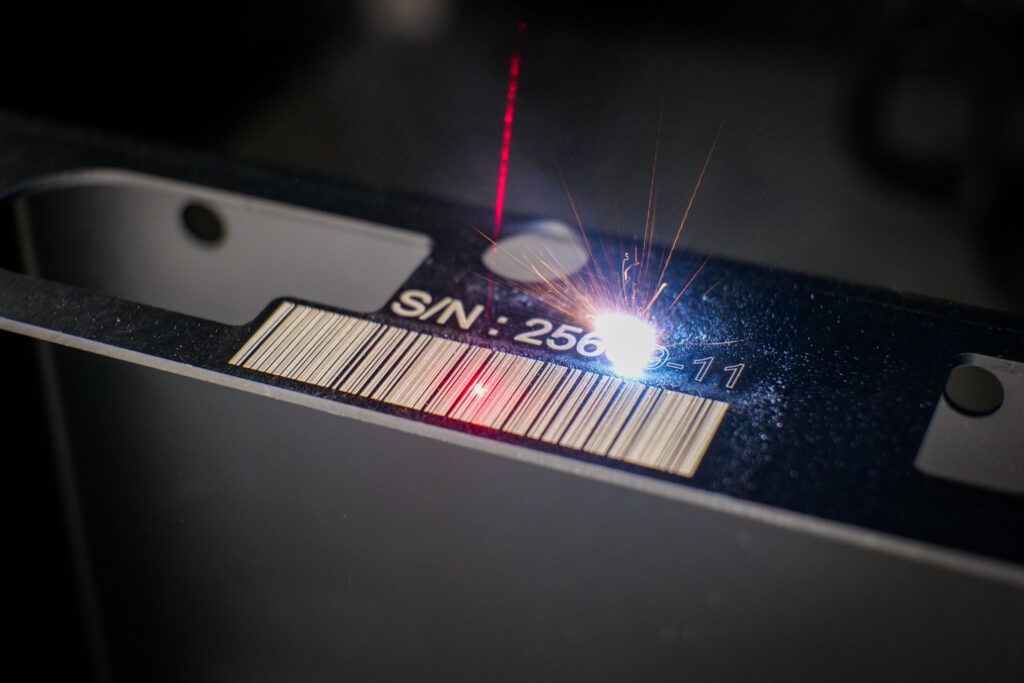
Because there is no mechanical contact, laser marking delivers highly precise, repeatable marks while minimizing wear on the marking equipment.
Laser marking is commonly used to create:
- Serial numbers
- Logos
- Date and batch codes
- Data Matrix codes
- QR codes
- Barcodes
- Product identification
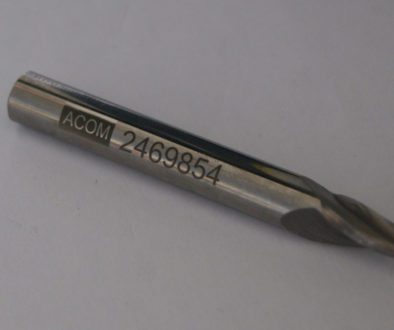
Modern laser systems can mark a wide variety of materials, including steel, stainless steel, aluminum, titanium, brass, copper, coated metals, and many engineering plastics. This versatility makes laser marking a popular choice for manufacturers that need flexibility across multiple products or materials.
What Is Dot Peen Marking?
Dot peen marking creates permanent identification through mechanical force.

A hardened stylus repeatedly strikes the material, producing a series of small indentations that form letters, numbers, symbols, or simple graphics. Rather than changing the surface with heat, dot peen creates a recessed mark by physically deforming the material.
Dot peen marking is commonly used for:
- Asset identification
- Vehicle identification numbers (VINs)
- Heavy equipment
- Structural steel
- Industrial components
- Permanent part identification
Dot peen systems are most commonly used on metals and other hard materials, although some plastics can also be marked depending on the application.
Like laser marking, dot peen produces durable, permanent identification. The difference is how the mark is created and how that affects performance in different manufacturing environments.
Laser Marking vs. Dot Peen Marking: Key Differences
Neither technology is inherently better than the other. Instead, each is designed to solve different marking challenges.
Mark Quality and Readability
If your application requires fine detail or machine-readable codes, laser marking typically offers greater flexibility.
Laser systems can produce crisp text, detailed logos, and high-resolution Data Matrix codes that are easy for scanners to read. This is especially valuable for manufacturers using automated traceability systems.
Dot peen marking creates clear, durable characters but is generally better suited for functional identification than intricate graphics or very small text. Many dot peen systems can also create Data Matrix codes, though the size and resolution may be more limited depending on the application.
Material Compatibility
Material selection plays a major role in choosing the right marking technology.
Laser marking performs well on many common manufacturing materials, including steel, stainless steel, aluminum, titanium, coated metals, and numerous plastics. Different laser settings can also produce different mark types on the same material.
Dot peen marking is typically used on steel, hardened metals, castings, and other heavy industrial components where physical indentation provides reliable identification.
Rather than asking which technology marks the broadest types of materials, it’s more useful to consider how each performs on your specific part and surface finish.
Mark Durability
Both technologies create permanent marks, but they achieve durability in different ways.
Laser marks can withstand heat, chemicals, corrosion, UV exposure, and normal industrial wear when the appropriate marking process is used.
Dot peen creates physical depth by indenting the material. This allows marks to remain visible even after painting, coating, or significant surface abrasion, making it a practical choice for parts that operate in demanding environments.
The most durable solution depends on how the part will be used after it leaves production.
Speed and Production Efficiency
For many automated manufacturing applications, laser marking offers faster cycle times.
Laser systems can quickly mark text, graphics, and complex Data Matrix codes, making them well suited for high-volume production and automated lines.
Dot peen marking speed depends on the amount of information being marked. Larger characters, longer text strings, and detailed graphics generally require additional time because each character is created through individual stylus impacts.
Production speed should always be evaluated alongside your throughput requirements and overall manufacturing process.
Maintenance Requirements
Maintenance is another important consideration when evaluating the total cost of ownership.
Laser marking systems have relatively few moving parts, resulting in minimal routine maintenance and no stylus replacement.
Dot peen systems require periodic inspection and replacement of the marking stylus. Depending on the equipment, mechanical and pneumatic components may also require routine maintenance over time.
Noise During Operation
Laser marking operates quietly because it uses light rather than mechanical force.
Dot peen systems generate audible tapping as the stylus repeatedly strikes the part. While this may not affect every application, it can influence workstation design or operator comfort in certain production environments.
Surface Impact
Laser marking permanently changes the material surface without physically deforming the part. This makes it well suited for finished products where appearance or dimensional accuracy is important.
Dot peen marking intentionally creates indentations. In many industrial applications, this is an advantage because the mark remains identifiable throughout years of use. However, physical deformation may not be desirable on cosmetic or precision-finished components.
Laser vs. Dot Peen at a Glance
| Feature | Laser Marking | Dot Peen Marking |
| Marking method | Non-contact | Mechanical contact |
| Mark appearance | Crisp, high resolution | Recessed dotted characters |
| Fine detail | Excellent | Good |
| Data Matrix codes | Excellent | Good |
| Speed | Fast for many applications | Varies by mark size and content |
| Maintenance | Minimal | Periodic stylus maintenance |
| Noise | Quiet | Audible impacts |
| Surface deformation | None | Permanent indentation |
| Best for | Precision and automation | Deep, durable identification |
Should You Choose Laser or Dot Peen?
The best marking system depends on what you’re trying to accomplish.
Laser marking may be the better fit if you need:
- High production speeds
- Detailed logos or graphics
- Small or high-resolution Data Matrix codes
- A non-contact marking process
- Integration into automated production lines
- Minimal routine maintenance
Dot peen marking may be the better choice if you need:
- Deep recessed marks
- Identification that remains visible after painting or coating
- Marking on heavy fabricated steel or cast components
- Long-term readability in abrasive environments
- A mechanical marking process for demanding industrial applications
Many manufacturers even use both technologies within the same facility. For example, laser marking may be used for precision-machined components while dot peen is used for large fabricated assemblies exposed to heavy wear.
Questions to Ask Before Choosing a Marking System
Before investing in a permanent marking solution, consider the following questions:
- What material are you marking?
- What information needs to be marked?
- How quickly does your production line operate?
- Will the mark need to remain visible after painting or coating?
- Does the mark need to be machine-readable?
- Will the system be portable, integrated into a production line, or used as a workstation?
- How important are maintenance requirements?
- What level of precision does your application require?
Answering these questions can quickly narrow your options and help ensure the marking system supports both your current production needs and future growth.
Choosing the Right Permanent Marking Solution
Laser marking and dot peen marking are both proven technologies used across modern manufacturing. Neither is the right choice for every application.
Laser marking excels when manufacturers need speed, precision, flexibility, and high-quality traceability marks. Dot peen marking remains an excellent solution for applications that require deep, durable identification capable of withstanding demanding operating conditions.
Rather than asking which technology is better, focus on which technology best supports your materials, production environment, and long-term manufacturing goals.