Industrial Laser Marking: A Comprehensive Guide for Manufacturers
Whether you’ve seen them at the checkout line, in a DVD player, or as a presentation pointer, lasers are an integral part of modern technology. However, not all lasers are the same. When it comes to manufacturing, industrial laser marking technology offers a highly sophisticated, permanent solution for tracking, labeling, and ensuring traceability in production lines.
Laser marking has become a cornerstone for ensuring product identification, branding, and regulatory compliance across various industries. From automotive components to medical devices, laser marking offers a permanent, non-contact solution that outshines traditional methods in terms of durability and efficiency.
This comprehensive guide dives deep into the advantages of laser marking, the different types of systems available, and how manufacturers can choose the best solution for their specific needs. Whether you’re looking to enhance production efficiency or comply with industry regulations, industrial laser marking provides the flexibility and innovation required in modern manufacturing.
In this guide, we’ll cover:
What Is Industrial Laser Marking?
Did you know the word laser is an acronym?
L.A.S.E.R. stands for Light Amplification by Stimulated Emission of Radiation, a technical term that describes the generation of a highly concentrated beam of light. The versatility of laser technology extends across various industrial applications, from marking and engraving to cutting and welding.
Lasers consist of:
- Gain medium: a material that works in tandem with electrical currents to stimulate the photons of light as they pass through.
- Energy supply: Energy supply for lasers usually comes in electrical currents. These currents are “pumped” through the grain medium to stimulate the atom as light passes through. The pumping of electrical currents causes the light to bounce faster through the grain medium.
- A material to provide optical feedback: The materials chosen for optical feedback have one primary job: steering, or directing the beam of light through the gain medium to stimulate.
While the standard laser pointer used in conference rooms and lecture halls are safe for the user with no protection, part marking lasers fall into two classes governed by the CDRH — Class I and Class IV:
- Class I lasers are housed inside a safety enclosure. No laser radiation can escape from the enclosure, and the machine operator doesn’t need to take any additional safety precautions.
- Class IV means the laser is applied in an “open” configuration where the operator can be directly exposed to laser radiation. In this case, laser safety glasses are a must.
Both laser classes are used in industrial laser marking systems and can produce different results depending on the material being marked.

Key Advantages of Industrial Laser Marking Systems
Laser marking is widely used across industries for its numerous advantages over other marking methods. The main benefits include:
- Permanency: Laser markings last as long as the part they’re etched onto.
- Non-contact: Lasers mark the surface without physical contact, reducing the risk of damage.
- Flexibility and versatility: Lasers can mark various materials, including metals, plastics, and elastomers.
- Low operating cost: Modern fiber-based lasers have no consumable parts, significantly reducing operating and maintenance costs.
- Innovation: The field of laser marking is continuously evolving, making systems more efficient and adaptable over time.
Laser marking equipment offers versatility, allowing users to mark different materials, such as metal, plastic, and rubber, without compromising the item’s integrity. The permanence of laser markings also deters counterfeiting, tracks production line efficiency, and enables accurate etching of barcodes and QR codes.
Laser marking has been adopted in numerous industries, including automotive, aerospace, military, defense, and medical applications. For instance, medical implants and tools can be marked without surface disruption to maintain smoothness. The precision and safety of laser marking make it an ideal solution in these highly regulated sectors.
Laser marking technology is versatile, cost-efficient, flexible, and safer than other options. Lasers require no tooling setup and little fixturing, greatly reducing the risk of surface damage.
5 Types of Laser Marking Technologies
Laser marking comes in various forms, each suited for different applications. The most common types are:
- General marking
- Annealing
- Ablating
- Deep engraving
- Plastic marking
1. General Marking
General marking is widely used due to its customizability and ease of programming. It can be adjusted to produce marks of varying intensity and colors, making it a versatile solution for marking steel, aluminum, and other materials. These marks are durable and suitable for long-term use.
2. Annealing
Annealing is a non-invasive form of laser marking that heats the material’s surface without causing physical disruptions. This method is important in medical applications where smooth surfaces are necessary, such as surgical tools or implants. Materials commonly used in laser annealing include stainless steel, chrome, cobalt, titanium, and elastomers.
3. Ablating
Ablating involves removing a surface coating to reveal the underlying material. Manufacturers use this technique on anodized aluminum, painted materials, and heat-treated surfaces to contrast the marked and unaffected areas. Ablating is especially useful for products that require highly visible, distinct marks.
4. Deep Engraving
Deep engraving uses a high-powered fiber laser marker to etch into materials like metal and rubber, creating a mark that goes beneath the surface. The depth of the engraving depends on variables such as power, speed, and frequency. By adjusting these factors, manufacturers can control the depth without compromising the item’s structural integrity.
5. Plastic Marking
Fiber lasers are especially effective for marking plastics due to their lower melting points than metals. In this process, lasers create a controlled “micro-burn” on the plastic’s surface, ensuring the part is marked without melting or damage.
Laser Marking Supports Traceability & Quality Control
Part marking is essential for industries that must maintain high-quality control standards, track products, and ensure brand recognition. Industries such as medical devices, electronics, aerospace, and automotive have adopted laser marking for its precision, permanency, and ability to track parts throughout production.
A key application of laser marking is traceability. By marking a 2D barcode onto a part, manufacturers can track it through the entire assembly process. This visibility is crucial for:
- Configuration Management: Keeping track of which parts are used in specific assemblies.
- Production Bottlenecks: Identifying slow points in the assembly process to improve efficiency.
- LEAN Analysis: Monitoring the number of steps in the production process to optimize workflows.
Choosing the Right Marking Technology
When considering industrial marking technologies, laser etching and industrial laser engraving are two commonly used methods that offer distinct advantages for manufacturers. While both involve using a laser to create permanent marks on various materials, the key difference lies in the depth of the mark and the method used to achieve it. Understanding these differences helps manufacturers select the best process for their specific applications.
Laser Etching
Laser etching is a process that alters the material’s surface by melting and expanding the material’s top layer. The beam raises the material’s surface slightly to create a high-contrast mark. Etching typically penetrates the surface to a depth of around 0.001 inches or less, making it a relatively shallow marking method compared to engraving. This process is ideal for creating detailed designs on materials like metals, plastics, and ceramics. Etched marks are durable and resist wear, making them suitable for applications where surface-level identification is needed, such as barcodes or serial numbers.
One advantage of laser etching is its speed. Because it only affects the surface layer, it’s faster than deeper marking methods, making it more efficient for high production. Laser etching is versatile, as it can be used on several materials, including coated or anodized metals. However, since it doesn’t remove much material, etched marks may be less resistant to extreme environmental conditions than engraved marks.
Laser Engraving
An industrial laser engraving machine removes material to create deeper marks. The laser vaporizes the surface layer, producing an indentation ranging in depth from 0.002 to 0.005 inches, and sometimes even deeper, depending on the material and application. Because of its depth, a commercial laser engraving machine produces highly durable marks that withstand harsh conditions, including abrasion, heat, and chemical exposure.
Industrial laser engraving is commonly used for part identification, branding, or traceability in various industries, like aerospace, automotive, and manufacturing, where long-lasting, tamper-resistant marks are essential. This method is particularly well-suited for metals but can also be used on plastics, wood, and other materials. Although engraving takes more time than etching due to the removal of material, it ensures a mark that is resistant to wear and difficult to remove.
Choosing Between Laser Etching and Engraving
The choice between laser etching and engraving depends on several factors, including the material being marked, the required mark depth, and the environment in which the marked part will be used. A laser etching machine may be the best option if a high-contrast, surface-level mark is sufficient and speed is a priority, However, if durability is a key concern and the mark needs to withstand extreme conditions, laser engraving is the more appropriate choice.
Types of Laser Technologies Used For Marking
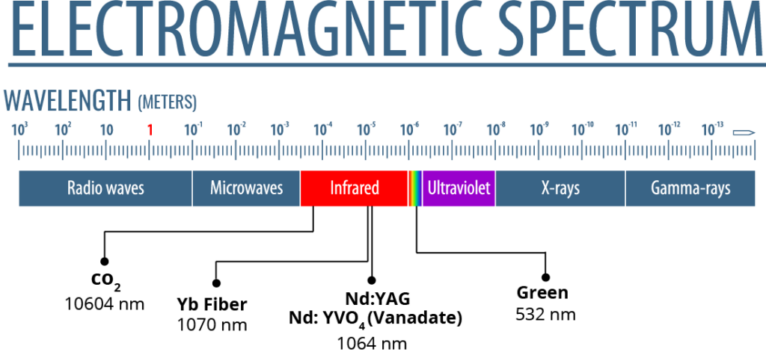
Laser marking technology offers manufacturers several different source types, each with benefits and best-use applications. The main types of laser marking sources are fiber lasers, CO2 lasers, green lasers, and UV lasers. Selecting the right laser source depends on several factors, including the material being marked, the required mark depth, and the precision necessary for the application.
Fiber Lasers
Fiber laser marking machines are widely used for marking metals and plastics, providing high power and efficiency. They amplify light through optical fibers, making them ideal for marking hard materials like steel, aluminum, and brass. These lasers are known for their durability and low maintenance costs. They also produce high-quality, permanent marks that are resistant to wear, a requirement in automotive, aerospace, and electronics.
CO2 Lasers
CO2 lasers, which use carbon dioxide gas to generate the laser beam, are well-suited for non-metallic materials such as wood, leather, glass, and certain plastics. These lasers operate at longer wavelengths than fiber lasers, which makes them effective for engraving or cutting organic and non-metal materials. CO2 lasers are a go-to solution for marking items such as packaging, textiles, and signage, offering speed and flexibility.
Green Lasers
Green lasers, which operate in the visible light spectrum, mark reflective materials like copper, gold, and silver. They are also effective on plastics and ceramics, providing high-contrast marks without damaging the substrate. Their shorter wavelengths enable precise marking, especially on sensitive materials, making them a preferred choice for industries that require precision, such as medical device manufacturing and electronics.
YAG Laser
Like the fiber laser, the YAG laser emits light at a wavelength of 1.064 micrometers. However, its internal structure differs, with the beam passing through distinct crystals to generate the laser output.
The YAG laser is well-suited for marking metals and plastics in its standard configuration. However, it can also be used to mark more delicate materials with appropriate adjustments.
UV Lasers
UV lasers operate at a very short wavelength, allowing for cold marking, where the material is marked without generating heat. This is particularly useful for sensitive materials that other lasers might damage. UV lasers are excellent for marking glass, plastics, and semiconductors. Their ability to produce micro marks makes them a favorite in industries requiring detailed and delicate engraving, such as pharmaceuticals and electronics.
Material Consideration for Laser Marking
Different materials respond differently to laser marking, making material selection an essential consideration in optimizing laser marking systems. The type of material determines the laser wavelength that should be used and affects the final mark quality, contrast, and durability.
Different materials include:
Metal
Metals like steel, aluminum, and brass are widely used in laser marking due to their excellent absorption of laser energy, especially with fiber lasers. Fiber lasers are highly efficient at marking metals because they operate at a wavelength allowing for deep and permanent marks. Laser engraving is commonly used for metal parts requiring durable identification, branding, or part traceability. On the other hand, laser etching is suitable when a faster process or surface-level marking is needed.
Plastics
Plastics, including ABS, polycarbonate, and acrylic, are frequently marked using CO2 or fiber lasers. The specific laser type and wavelength needed for marking plastic depend on its chemical composition. Laser marking plastic often involves creating high-contrast marks without damaging the part’s integrity. A lower-power laser may be used to avoid distorting the plastic material, while still achieving legible marks. Laser marking is commonly used in electronics, packaging, and medical devices, where plastic is prevalent.
Ceramics and Glass
Ceramics and glass present unique challenges for laser marking. CO2 lasers are often best for marking these materials due to their longer wavelengths, which efficiently mark non-metallic surfaces. For more delicate applications, such as pharmaceuticals or electronics, UV lasers may be used for cold marking to prevent material damage. UV lasers create exact marks without generating heat, making them suitable for sensitive materials like glass.
Wood and Organic Materials
CO2 lasers excel at marking organic materials, including wood, leather, and textiles. The longer wavelength effectively burns or etches the surface of these materials to create marks. The type of laser marking system chosen for wood and organic materials depends on the desired depth and speed of marking. CO2 lasers are commonly used in the signage and furniture industries, where engraving or etching provides a clean and precise finish.
Industrial Laser Marking vs. Dot Peen Marking: Best Use Cases
Laser and dot peen markings offer durable, permanent marks, but differ in their marking process, speed, and versatility. Each technology has specific applications where it excels, making the choice between them highly dependent on the industry and materials involved.
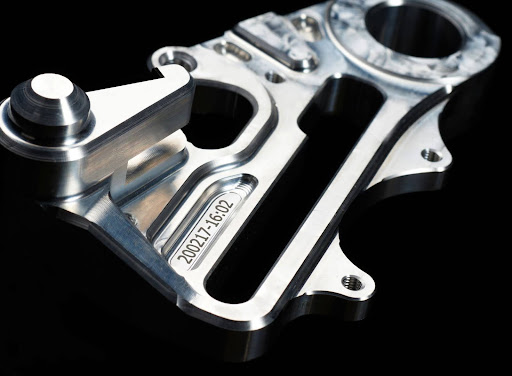
Laser Marking
Laser marking uses a concentrated beam of light to etch or engrave the surface of a material. It offers precision and versatility, making it ideal for industries that require high-quality, permanent marks without damaging the material. Laser marking is often used for branding, traceability, and compliance purposes in the following industries:
- Automotive: The automotive industry relies on laser marking for part identification and traceability, particularly metal parts like engine components, transmissions, and brake systems. The high precision and durability of laser marking ensure that part numbers and serial codes remain readable over time, even in harsh environments.
- Medical Devices: Laser marking creates high-contrast, sterile marks on surgical instruments, implants, and medical devices. There is no contact with the part, ensuring no contamination risk. The marks remain clear and legible, even after repeated sterilization.
- Electronics: For industries like electronics and semiconductors, where space is limited, laser marking excels in creating precise, tiny marks that can include barcodes, QR codes, and alphanumeric characters. The ability to mark delicate surfaces without causing damage is a major benefit.
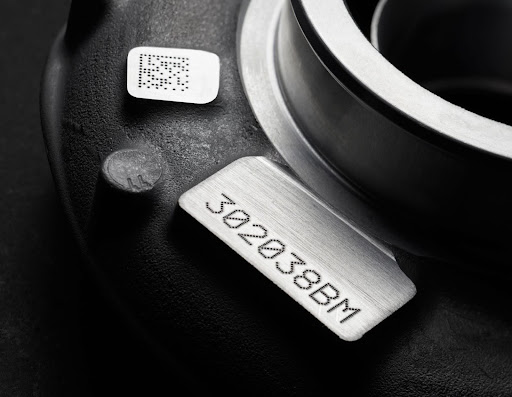
Dot Peen Marking
Dot peen marking, also known as pin marking, uses a mechanical pin to indent the surface of a material, creating a series of dots that form a readable mark. This process is particularly well-suited for rugged environments and applications that require deep, permanent marks. Dot peen marking is commonly used in the following industries:
- Heavy equipment and manufacturing: Dot peen marking is ideal for heavy equipment and manufacturing sectors, including aerospace, defense, and oil and gas. It can create deep, durable marks that withstand harsh conditions, such as exposure to high temperatures, chemicals, and mechanical wear.
- Metalworking: For industries dealing with hardened metals, dot peen marking provides the depth and permanence needed to identify large parts or components. It’s often used in metal fabrication for marking tools, dies, and steel components.
- Construction: In industries such as construction, where parts may be exposed to outdoor elements and heavy use, dot peen marking offers a rugged solution for part identification. The deep marks created by dot peen machines ensure that information remains legible over time, even when exposed to harsh weather conditions.
10 Industrial Part Marking Considerations
Several factors must be considered to ensure the industrial part marking method aligns with the specific application needs. From material type to regulatory compliance, making informed decisions about marking systems is crucial for maintaining traceability, branding, and overall product quality. Here are 10 key considerations to keep in mind when selecting an industrial part marking system:
1. Material Type
Different materials react differently to marking methods. Metals, plastics, ceramics, and composites each require tailored marking approaches. For instance, fiber lasers work well with metals, while CO2 lasers are more effective on non-metallic materials like plastics or glass.
2. Marking Depth
The required marking depth depends on the application. Laser etching, for example, creates surface-level marks suitable for many identification needs, whereas laser engraving or dot peen marking offers deeper, more durable marks for heavy-duty applications.
3. Contrast and Visibility
Marks need to be easily readable, especially for traceability or compliance purposes. High-contrast marks ensure that barcodes, serial numbers, or logos remain visible even after exposure to wear or harsh environments.
4. Durability
Marks must withstand extreme conditions In industries like aerospace, automotive, and defense, including abrasion, chemicals, and high temperatures. Laser engraving and dot peen marking provide the durability necessary for these demanding environments.
5. Marking Speed
For high-volume production, the speed of the marking process is critical. Laser marking systems are typically faster than mechanical systems like dot peen marking, making them ideal for industries requiring rapid throughput.
6. Precision
Applications like electronics and medical devices require precision and detail in the markings. Laser marking provides high accuracy for marking small components with intricate designs, barcodes, or identification numbers.
7. Compliance and Traceability
Many industries are subject to strict regulations for traceability, requiring permanent and readable marks for product identification. The marking system must meet industry standards for compliance and traceability, especially in sectors like aerospace, automotive, and medical devices.
8. Environmental Conditions
Consider the operational environment. If parts will be exposed to harsh conditions, such as high humidity, extreme temperatures, or mechanical wear, opt for marking methods like dot peen or deep laser engraving, which offer superior resilience.
9. Type of Mark
The type of mark, whether it’s a logo, serial number, or barcode, can impact the marking process. Laser marking is well-suited for high-resolution marks, while dot peen excels at creating durable, deep marks for part identification.
10. Cost and Maintenance
Finally, assess the marking system’s cost and maintenance requirements. While laser systems may have higher initial costs, they often require less maintenance and offer a longer lifespan than mechanical systems like dot peen machines.
By carefully considering these factors, manufacturers can select the most appropriate industrial part marking system, ensuring efficiency, durability, and compliance across their production processes.
What to Look for in Premium Industrial Laser Marking Technology
High-quality industrial laser marking solutions are designed to deliver permanent, precise, and repeatable marks while fitting seamlessly into real-world manufacturing environments. When evaluating advanced laser marking technology, manufacturers should prioritize systems that balance performance, flexibility, ergonomics, and integration.
Premium laser marking systems typically use fiber laser technology, which enables fast marking speeds, excellent precision, and consistent results across a wide range of materials. These systems support both light and deep engraving, decorative marking, and permanent part identification.
Equally important is the physical design of the equipment. Compact footprints, ergonomic access to parts, and the ability to integrate into production lines, workshops, or warehouse environments all contribute to higher operator efficiency and safer daily use. A well-designed laser marking solution should enhance productivity without disrupting existing workflows.
Key Features of a High-Performance Laser Marking Station
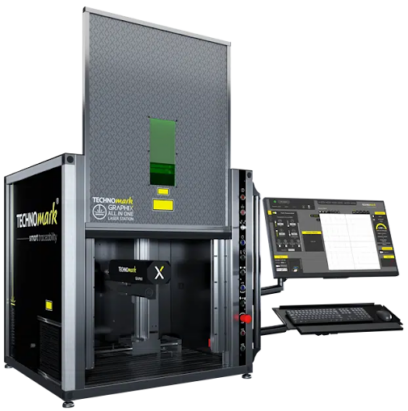
A premium laser marking station combines power, precision, and ease of use in a single, cohesive system. Manufacturers evaluating marking stations for small to medium-sized parts should look for all-in-one designs that integrate the marking head and electronics into a single enclosure. This approach simplifies installation, reduces setup time, and minimizes the system’s overall footprint.
Ergonomics and Accessibility
User-focused design is a hallmark of high-end laser marking equipment. Features such as wide-opening access doors, automated or assisted loading mechanisms, and clear sightlines improve operator comfort and speed during repetitive marking tasks. Ergonomic access becomes especially important in facilities with frequent part changes or short production runs.
Flexible Marking Coverage
Advanced laser marking stations often include motorized axes that allow the marking head to move across an extended working area. This flexibility supports a wider range of part sizes and enables efficient marking of multiple locations without repositioning the workpiece. Systems that support software-controlled motion are particularly valuable for repeatable, automated workflows.
Versatile Marking Capabilities
High-quality laser marking technology should support a broad range of marking types, including:
-
Alphanumeric text
-
2D DataMatrix codes
-
Logos and graphics
-
Timestamps and serial numbers
-
Linear and 2D barcodes
For complex or multi-level parts, premium systems may offer multi-plane or 3D marking capabilities, allowing consistent focus across stepped, angled, or curved surfaces. This ensures uniform mark quality even on challenging geometries.
Intuitive Software for All Skill Levels
Software usability is often a differentiator between entry-level and premium laser marking solutions. The best systems offer intuitive interfaces with modes tailored to different users—simplified creation tools for new operators and locked, production-ready workflows for repetitive marking tasks. This reduces training time, minimizes errors, and helps maintain consistent output across shifts.
Materials Support and Expandability
Manufacturers should also look for systems that include:
-
Built-in material libraries to optimize laser parameters
-
Compatibility with a wide range of metals and plastics
-
Optional accessories such as rotary axes for cylindrical parts or fume extraction for cleaner operation
These features extend the system’s usefulness and help future-proof the investment as production needs evolve.
Industrial Laser Marking: Standing the Test of Time
Industrial laser marking stands out as a transformative technology, offering unparalleled advantages over traditional marking methods. From ensuring traceability and compliance to enhancing brand integrity and combating counterfeiting, laser marking empowers manufacturers across diverse industries to achieve excellence in their production processes.
The versatility of laser marking — from etching and engraving to annealing and ablating — ensures that every unique material and application requirement is met with precision and reliability. Whether you’re operating in the automotive, medical, electronics, or aerospace sector, the right laser marking system can significantly boost your operational efficiency, reduce maintenance costs, and provide marks that stand the test of time.