10 Things to Know About Dot Peen Marking Machines
Choosing an industrial marking system means balancing mark permanence, material compatibility, production requirements, traceability, and maintenance. Dot peen marking machines address many of these requirements with a process that creates permanent marks without removing material from the part.
From portable marking of large components to automated production-line applications, dot peen systems can adapt to a wide range of manufacturing environments.
What Is Dot Peen Marking?
Dot peen marking is a direct part marking process that uses an electromagnetic or pneumatic stylus to create a series of small indentations in a material’s surface. Together, those dots form text, serial numbers, logos, Data Matrix codes, and other identification marks.
Unlike marking methods that remove material, dot peen deforms the surface. This produces a permanent mark while generating little to no waste.
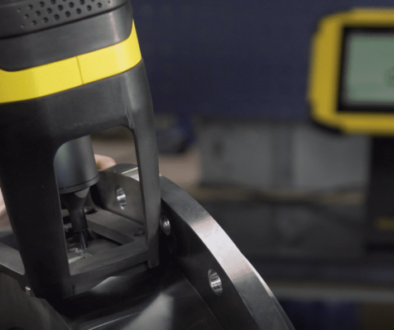
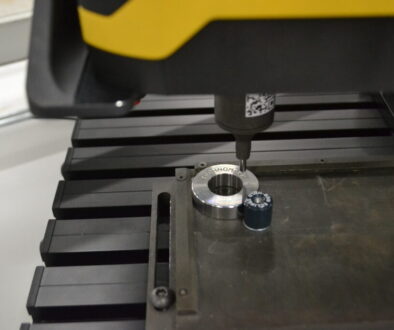
Manufacturers use dot peen marking when parts need identification that remains readable throughout their service life. Depending on the machine configuration, the process can be performed with a portable unit, at a workstation, or as part of an automated production line.
10 Dot Peen Marking Benefits and Capabilities
Understanding what dot peen machines can do makes it easier to determine whether the technology fits a particular part, material, and production environment.
Let’s dive into the top 10 reasons to choose dot peen marking.
- Portable, benchtop, and integrated configurations
- Permanent marks for long-term identification
- Industry 4.0 and automation compatibility
- Data Matrix code marking
- Multiple marking options
- Compatibility with different metals
- Relatively low maintenance requirements
- Little to no marking waste
- Ability to mark uneven and curved surfaces
- Adaptability for specific manufacturing environments
1. Portable, Benchtop, and Integrated Configurations
One of the biggest advantages of dot peen marking is its versatility.
Portable systems can bring the marking head directly to large or difficult-to-move components. For small and medium-sized parts, the same type of marking technology can be configured on a column base to create a workstation.
Dot peen equipment can also be integrated into a production line for repetitive or higher-volume marking. This flexibility lets manufacturers select a configuration based on the part and production process rather than forcing every application into the same setup.
2. Permanent Marks for Long-Term Identification
A dot peen stylus creates controlled indentations by deforming the material’s surface. Because the mark is physically formed in the part rather than applied as a surface coating, it provides durable identification.
That makes dot peen useful for applications where identification needs to remain readable over the service life of a component, including automotive, aerospace, bicycle, and other manufactured parts.
Permanent identification can support serial-number tracking, VIN marking, traceability, and other applications where losing a mark could interrupt a manufacturer’s ability to identify a component.
3. Industry 4.0 and Automation Compatibility
Modern marking equipment doesn’t have to operate as an isolated production process. Dot peen marking machines can be connected to manufacturing networks and integrated with automated systems.
Depending on the equipment and controls, connectivity can allow production information to be exchanged in real time and marking operations to be controlled externally.
4. Data Matrix Code Marking
Traceability often requires fitting substantial amounts of identification data into a small area. Data Matrix codes provide one way to accomplish that.
Dot peen systems can create 2D Data Matrix codes directly on compatible parts. These codes can encode significantly more information than a basic serial number while occupying relatively little surface area.
A Data Matrix code can contain up to 2,335 alphanumeric or 3,116 numeric characters within a 1 cm² area. It can also remain readable with up to 20% deterioration.
For manufacturers that need machine-readable identification, this capability can make dot peen an important part of a broader direct part marking and traceability strategy.
5. Multiple Marking Options
Dot peen marking isn’t limited to letters and numbers. Depending on the machine and software, manufacturers can create:
- Alphanumeric text and serial numbers
- 2D codes, including Data Matrix codes
- Logos and other visual markings
- Marks with different orientations and character configurations
This flexibility helps a single marking platform support multiple identification requirements without extensive equipment changes.
6. Compatibility With Different Metals
Material compatibility is one of the first factors to evaluate when choosing an industrial marking method.
Dot peen machines can mark materials including steel, stainless steel, aluminum, bronze, and carbide, provided the machine and stylus configuration are suitable for the material and application.
Search behavior also shows interest in material-specific applications such as dot peen marking depth on stainless steel, Data Matrix marking on stainless steel, dot peen marking on copper, and marking stainless steel in harsh environments. These applications require more than simply determining whether a material can be marked. Desired depth, surface geometry, hardness, code readability, and the operating environment can all affect machine selection and marking parameters.
7. Relatively Low Maintenance Requirements
Dot peen systems use a tungsten carbide stylus to repeatedly impact the workpiece. The stylus is durable, but it won’t last indefinitely.
Eventually, normal wear requires stylus replacement. The stylus spring may also need to be reset when the stylus is replaced.
Planning for these routine maintenance requirements helps manufacturers maintain consistent mark quality and avoid unexpected interruptions.
8. Little to No Marking Waste
Dot peen creates an indentation instead of cutting away layers of the workpiece. Because the process deforms rather than removes material, it doesn’t produce the chips or removed material associated with some other permanent marking processes.
This can simplify cleanup and makes dot peen worth considering when manufacturers want a permanent direct part mark without generating material waste during marking.
9. Ability to Mark Uneven and Curved Surfaces
Industrial components aren’t always flat. Dot peen equipment can accommodate certain variations in part geometry, including surfaces with differences of up to approximately 5 mm.
The technology can also be used for cylindrical and angled components when the machine, tooling, and accessories are properly configured.
For manufacturers marking fabricated assemblies, pipes, shafts, frames, or other non-flat components, this capability can expand the range of parts that can be handled by one marking technology.
10. Adaptability for Specific Manufacturing Environments
A marking system often needs to accommodate more than the part itself. Dust, component geometry, clamping requirements, automation, and production volume can all influence the final configuration.
Dot peen systems can be paired with accessories designed for these conditions. Bellows, for example, can help protect equipment in dusty environments. Clamping systems can hold parts in position and support marking around the circumference of certain components.
Controller outputs and other system elements can also be configured around the production process.
When Should You Choose a Dot Peen Marking Machine?
Dot peen is a strong option when a manufacturer needs a permanent direct part mark, particularly when traceability, Data Matrix codes, serial numbers, or long-term identification are priorities.
It’s also useful when marking requirements vary. A portable configuration can support maintenance applications and oversized parts, while benchtop and integrated systems can accommodate repetitive production environments.
Dot peen isn’t automatically the right choice for every application, however. Part material, hardness, geometry, required marking depth, cycle time, surface finish, readability requirements, and production environment should all be considered before selecting a system.
Find the Right Dot Peen Marking System for Your Application
Dot peen marking combines permanent identification with flexible machine configurations, material versatility, traceability capabilities, and relatively straightforward maintenance. Portable, benchtop, and integrated options also make the technology adaptable to different production environments.
Choosing the right system still comes down to the details of your application. Material, part geometry, required marking depth, production volume, automation requirements, and the information being marked can all influence which machine and configuration will work best.
If you’re still comparing technologies, explore our industrial part marking methods to see how different processes align with common manufacturing applications or reach out to our team at Technomark.