
A Manufacturer’s Guide to Laser Marking on Metal for Permanent Traceability
A Manufacturer’s Guide to Laser Marking on Metal for Permanent Traceability
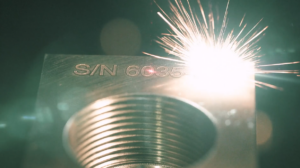
In manufacturing, traceability isn’t just a nice-to-have — it’s important for maintaining quality control, supply chain reliability, and regulatory compliance. When working with metal parts that operate in harsh industrial environments, you need a reliable, permanent identification method. That’s where laser marking on metal comes in.
Laser marking offers a durable, high-contrast solution that ensures critical information remains legible throughout the entire lifecycle of a product, even under extreme conditions.
In this guide, we’ll cover the fundamentals of laser marking on metal and how it addresses key traceability challenges. We’ll dive into different marking methods, tackle the unique obstacles posed by harsh environments, and share best practices to help you implement an effective laser marking strategy.
If you’re a manufacturer seeking a reliable way to achieve permanent traceability, this guide is your starting point for building a more efficient and resilient operation.
Understanding Laser Marking on Metal
Before adopting any technology, it’s important to understand how it works. Laser marking is a non-contact process that uses a focused beam of light to create a permanent mark on a material’s surface.
Unlike traditional metal marking methods like stamping or chemical etching, laser marking offers superior precision and versatility without compromising the structural integrity of the part.
Common Laser Marking Processes
There are several techniques for laser marking on metal, each suited for different materials and applications.
The most common processes include:
- Engraving/Ablation: This process uses a high-power laser beam to vaporize material from the surface, creating a deep, permanent mark. It’s ideal for applications requiring extreme durability, as the engraved mark can withstand significant abrasion. Laser marking steel and aluminum often involves this method.
- Annealing: Commonly used for laser marking for stainless steel, titanium, and other ferrous metals, annealing is a gentler process. The laser heats the metal’s surface, causing oxidation to occur just below it. This creates a high-contrast, dark mark without removing any material, preserving the part’s surface finish and corrosion resistance. It is an excellent choice for medical devices and aerospace components.
- Etching: A faster process in which a laser melts and rapidly cools the metal’s surface, creating a slightly raised, textured mark. This method is often used to create serial numbers and logos when speed is a priority.
Suitable Metals and Surface Considerations
Laser marking is compatible with a wide range of metals, including:
- Stainless steel
- Aluminum
- Titanium
- Brass
- Copper
- Coated metals
The success of the marking process depends on factors like the metal’s composition, surface finish (e.g., polished, brushed, or coated), and reflectivity.
| For example, Highly reflective metals may require a specific laser type, like a fiber laser, to achieve optimal results. |
Key Traceability Challenges in Harsh Conditions
Metal parts in industries like automotive, aerospace, and oil and gas are often subjected to extreme environments. These conditions pose significant challenges to the legibility and permanence of identifying marks.
- Environmental exposure: Parts may face constant abrasion, exposure to corrosive chemicals, extreme temperature fluctuations, and intense UV radiation. Traditional labels or ink-based marks quickly degrade and become unreadable under these circumstances.
- Production issues: Marking complex geometries, such as curved surfaces or very small parts with limited space, can be difficult with traditional metal marking methods. Conversely, marking very large or unwieldy parts can also be a logistical hurdle, though this is increasingly solved with portable laser marking solutions.
- Readability requirements: Traceability often relies on machine-readable codes like a laser marking barcode on metal or Data Matrix codes. These codes must maintain high contrast and clarity for scanners to read them accurately throughout the product’s lifecycle.
- Lifecycle durability: For many components, the identifying mark must last for decades. This requires a marking solution that is not only resistant to environmental factors but also permanent and inseparable from the part itself.
How Laser Marking Enables Permanent Traceability
Laser technology solves traceability challenges in tough manufacturing environments with a reliable, durable solution.
Durability and Resistance
Laser marks are exceptionally durable. Because the mark is created by altering the material itself — either by removing it or changing its properties — it cannot be washed away, smudged, or peeled off. Annealed marks on stainless steel are particularly resilient, as the mark is protected beneath the surface, making it resistant to corrosion and sterilization processes.
This lasting mark keeps barcodes and serial numbers on metal easy to scan for years.
Precision and Speed
The non-contact nature of laser marking on metal means there is no mechanical stress or wear on the part, preserving its structural integrity. Lasers deliver very high accuracy, capable of creating highly detailed graphics, micro-text, and compact 2D codes on even the smallest components.
The process is also fast, easily keeping pace with high-volume automated production lines.
Integration with Traceability Systems
Modern laser marking systems are designed to integrate seamlessly with existing enterprise resource planning (ERP) and manufacturing execution systems (MES). This connectivity allows for the automated generation of unique serial numbers, batch codes, and other data, which can then be marked directly onto parts.
The data is then logged in the system, creating a complete traceability record that links the physical part to its digital twin.
Best Practices for Laser Marking Success
Achieving consistent, high-quality marks requires attention to detail and adherence to best practices. A well-defined process ensures that your traceability system is reliable and effective.
1. Prepare the Surface
For optimal results, the metal surface should be clean and free of oils, grease, or contaminants. While laser marking is more forgiving than other methods, a clean surface ensures the laser interacts directly with the metal, resulting in a cleaner, more consistent mark.
2. Select the Right Laser and Settings
The choice of laser — such as fiber, CO2, or UV — and its settings (power, speed, frequency) are critical. These parameters should be carefully calibrated based on the specific metal, the desired mark type (engraving vs. annealing), and the required cycle time.
3. Fixture the Part Securely
Proper part fixturing is key to maintain a consistent focal distance between the laser and the part surface. Any variation in distance can affect the quality and consistency of the mark. Custom fixtures may be necessary for parts with complex shapes or for high-volume production runs.
4. Verify Mark Quality
Regularly verify the quality of your marks. This includes checking for sufficient contrast for scanner readability, ensuring the correct depth for durability, and maintaining consistency across all parts.
Automated vision systems can be integrated to perform 100% inspection of marks like a laser marking barcode on metal, ensuring every part meets quality standards before moving to the next stage.
5. Maintain Your System
Like any piece of industrial equipment, laser marking systems require regular maintenance. Follow the manufacturer’s guidelines for cleaning optics, checking cooling systems, and performing routine service. Proactive maintenance prevents downtime and ensures the system continues to operate at peak performance.
A Lasting Solution for Traceability
For manufacturers navigating the demands of modern industry, laser marking on metal offers a definitive solution to the challenges of permanent traceability. By creating durable, high-precision marks that withstand the harshest conditions, this technology provides the reliability needed for effective quality control and supply chain management.
From laser marking steel components in automotive to creating biocompatible marks for medical devices, laser marking technology proves its value across every industry it touches.
Partner with Technomark for Unmatched Traceability
Ready to elevate your traceability systems? By investing in the right metal marking methods, your organization can build a more resilient, transparent, and efficient manufacturing operation.
Contact Technomark today to discover how our advanced laser marking solutions can be tailored to meet your specific industrial needs.